

clinically proven, backed by science
A robust, clinical study on the effect of phytoestrogen, used in Naturaful products, on breast augmentation is conducted by medical doctors in South Korea. Although individual results may vary, the results look promising.
Jin Wha Chung, M.D.The Catholic University of Korea, Saint Mary’s Hospital Orthopaedic Department, Seoul, Korea

Most gains were achieved in months 3 to 6!
An average impressive growth of 3.6cm or 1.4 inch was observed in the phytoestrogen clinical study, with the most growth happening in month 3 to 6.

breast density changes under magnification
At 40x and 100x magnification, breast density has changed and got firmer within 3 months.

Test COnfiguration
30 Women were tested with phytoestrogen tablets over a 6 month duration in Europe.
Summary
We speculated that for young women who are premenopausal, taking phytoestrogen promotes the differentiation and development of mammary glands and thus augments the breasts, it could be an alternative against breast-augmentation surgery--which despite its wide use has been rife with side effects.
For post menopausal women, taking phytoestrogen is associated with the breast enhancement of menopausal women, and its mechanism is presumably, as the results of mouse experiment show, the increase in the number of mammary glands and their constituent cells. There were also some subjective changes. For instance, women who took phytoestrogen reported that their breast increased, and that their skin and hair became more beautiful. There may be additional benefits for the peri/post menopausal women in reduction of menopause symptoms such as improved Bone density, cardi vascular health, vaginal atrophy, hot flash reduction.
Studies on CHASTEBERRY USED in NATURAFUL BALANCE GUMMIES
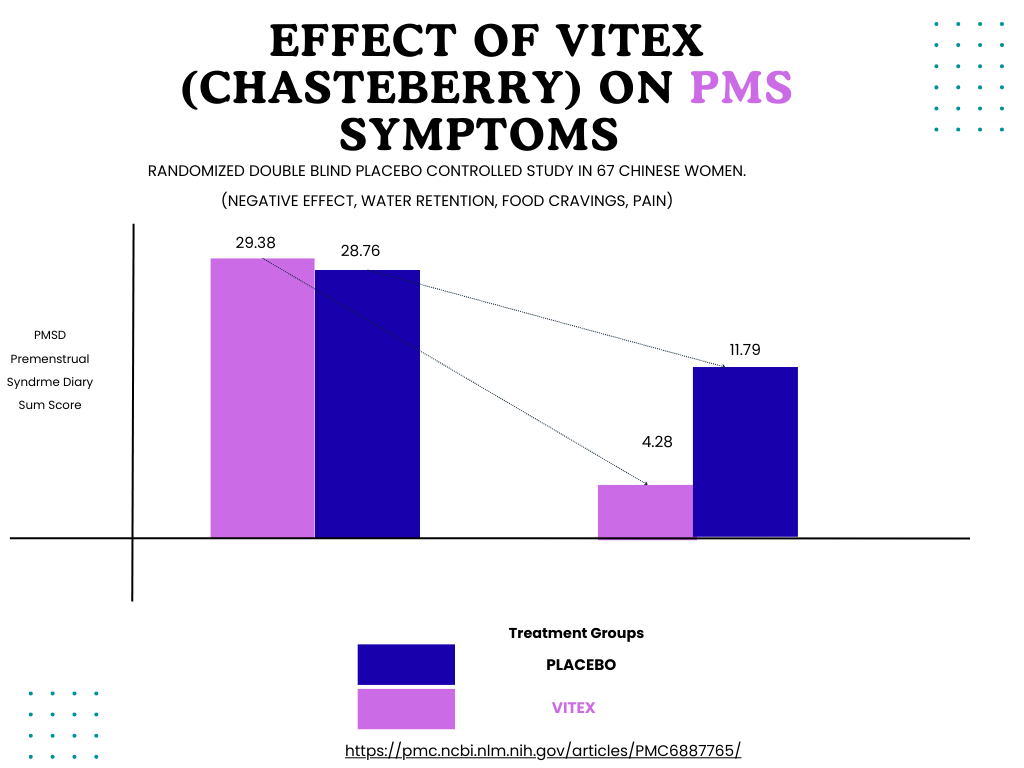
Below are studies showing effect of Chasteberry on PMS and Menopause symptoms.
Study Details
Clinical Study of Phytoestrogen On Breast Enhancement
The phytoestrogen has the positive effect in osteoporosis, cardiovascular diseases, facial flushing and other postmenopausal symptoms. And the purpose of this study was to evaluate the effect of phytoestrogen in increasing breast size clinically and histological. The result show meaningful augmentation of the breast in group taken phytoestrogen tablets (PEITO) and in mouse study, study group showed more lobules and more duct cells in lobules than control group histological.The results mean phytoestrogen has weak estrogenic effect on the lobular structures of the breast tissue and finally increasing their size without any significant side effect
1. Introduction
Women’s breasts increase during adolescence and pregnancy, and to a lesser extent the same phenomenon occurs during the menstrual period. All of these are concerned with female hormones.
The breast increase resulting from hormones has been reported clinically among patients who take estrogen hormones, antidepressants and contraceptives. Furthermore, it is known that substances such as female hormones, prolactin and growth factors play a role in triggering these reactions, stimulating estrogen receptors distributed across lobules and modulating cell division and apoptosis.
Breast-augmentation surgery has been performed on premonopausal women for the purpose of beauty enhancement, that is, to increase the size of the breasts. However, issues such as high cost, post-surgery infection attributed to the materials inserted within the breasts, tissue rejection, have effectively limited the use of such procedures. Additionally, in recent years the use of estrogen, a female hormone taken by menopausal women, has decreased due to the increasing occurrence of breast and uterine cancers resulting from long-term use of the hormone.
Compared to estrogen, phytoestrogen originates in plants. Recently many foods and extracts containing this substance have been used for the treatment of menopausal symptoms, and it has been shown that phytoestrogen is effective in decreasing the frequencies of breast and uterine cancers, and in preventing osteoporosis and cardiovascular disease. Specifically, for Asian people such as Chinese, and for Japanese living in the United States, the frequency of breast cancer is low. Moreover, the occurrence of flushing--one of the menopausal symptoms--now stands at just 20%, dramatically lower than 80% of Western women. It is believed that one of the most significant factors is that phytoestrogen is contained in many foods common to Asian diets.
Since the 1980s, research on phytoestrogen has been led by American and European governments, as well as by manufacturers of soy-based foods. Thereafter, many menopausal women have taken phytoestrogen as a natural alternative in light of their concerns about the side effects of the hormonal treatment previously used. The Food and Drug Administration (FDA) of the United States declared in 1999 that foods containing soy proteins in excess of 25 grams (such as soy, soybean milk, tofu, etc.) have low amounts of saturated fatty acid and cholesterol, and that they are effective for preventing cardiac diseases. Lamartiniere et al. (1998) claimed that an injection of genistein, a type of phytoestrogen, into a mouse less than 50 days old promoted the differentiation and maturation of mammary glands and thus contributed to reducing the occurrence of cancer against a carcinogen. Wang et al. (1995) claimed that an injection of the isoflavone formonenelin into the mouse whose ovary was removed led to the increase of prolactin in blood plasma and thus the augmentation of lobules.
During our experiments in the induction of osteogenesis against osteoporosis, we speculated that if for young women who are premenopausal, taking phytoestrogen promotes the differentiation and development of mammary glands and thus augments the breasts, it could be an alternative against breast-augmentation surgery--which despite its wide use has been rife with side effects—and against other medicines. Therefore, we devised this experiment.
2. Methods
A. Phytoestrogen tablets
PEITO (Product of Belgium) was used in this study. One tablet of this product weighs approximately one gram (0.996±0.023 gram) and is composed of substances extracted from hops, buckwheat, fennel seed, rye, barley, etc. In order to analyse the ingredients of this product, it was grounded with a mortar and crushed with a homogenizer filled with 1 liter of 100% methanol, whereupon the effective substances within it were extracted. All these processes were repeated three times and the supernatant was collected, concentrated and then redissolved in small amount of methanol for a final concentration of 50%. Subsequently it was loaded on a column saturated with hydrophobic interaction chromatography resin. Consequently we confirmed through chromatography that this product contains a large amount of genistein and diadzein.
B Subjects and Methods
i) Experiment with premenopausal women
We had thirty premenopausal women ages 24 to 35 (mean age 27.3) take the PEITO tablets for 6 months continuously. They took 10 tablets daily--five in the morning and five in the afternoon--30 minutes after each respective meal. Participants’ weights and breast sizes were measured at the beginning prior to taking tablets, and again at three months and six months after taking them. The breast size was measured from [illegible] to the nipples in a standing posture, and the values of liver (SGOT/PT) and renal (BUN/Creatinine) function and cholesterol were compared through blood tests.
ii) Animal experiment with mice
Thirty female mice were divided into two groups: an experimental and a control group. They were 12 weeks old, 140-200 grams in weight, and of the Sprague-Dawley strain. For the control group we fed an assorted feed without beans (Shin Chon Feed, Kimpo Kyunggido) and tap water, while for the experimental group we added 10 ground-up PEITO tablets per day to the same diet used for the control group. We obtained lobules from the slaughtered mice after three months’ experiment. The lobules thus obtained were fixed by soaking in 10% formalin solution for 12 hours. Tissue slices 5 μm thick were obtained by common tissue-production procedures and subjected to hematoxylin & eosin (H&P) staining [some words illegible]. We first examined the nipple tissues under 40x magnification and, based on that, compared the number of lobules located in hypodermic muscular coat. We also compared the number of cells that are constituent of lobules under 100x magnification.
3.Results
The mean weight of 30 women was increased from 53.7 kg at the beginning to 54.4 kg in six months, and mean breast size increased from 84.3 cm ( 33.19 inches) at the beginning to 87.9 cm (34.61 inches) in six months. In order to exclude the effect of breast augmentation by the increased weight of the participants, we compared results at intervals of three months: the beginning, three months and six months. Although there was no significant difference in breast augmentation between the 1 st 3 months-0.7371 p=0.3659) and next 3 months (-1.0665, p=0.1122), the difference between the 1st months and 6th month was significant (1.8036, p=0.0038).
Statistically, we used the Bonferroni method for p value, with a negative estimate taken to indicate that breast size measured at a later time was greater than one measured in the former time (Table 1, 2). We checked the items listed on the blood test before and after the experiments, and no significant difference or abnormal condition was examined.
Meanwhile, in terms of the histological tests obtained from the mouse experiment, under 40x magnification we could identify the increasing number of mammary glands at six months compared to those at the beginning, and under 100x magnification we could see the increase of cells constituent of mammary glands (Fig. 1, 2).
Table 1. Mean weight at each interval
Fig. 1. Cells of mouse breast tissue under 40x magnification
Fig. 2. Cells of mouse breast tissue under 100x magnification (A: beginning, B: 3 months)
Chasteberry on Reduction of Menopause Symptoms
https://pubmed.ncbi.nlm.nih.gov/31780016/ (PMS)
This meta-analysis is an assessment of clinical trials carried out with well-defined VAC extract-containing medicines. The uniformity of indication and endpoints analysed renders the results of the trials included comparable. The remission of symptoms was 2.57 times (1.25-4.35 95%) more likely in those taking VAC than in those who received a placebo.
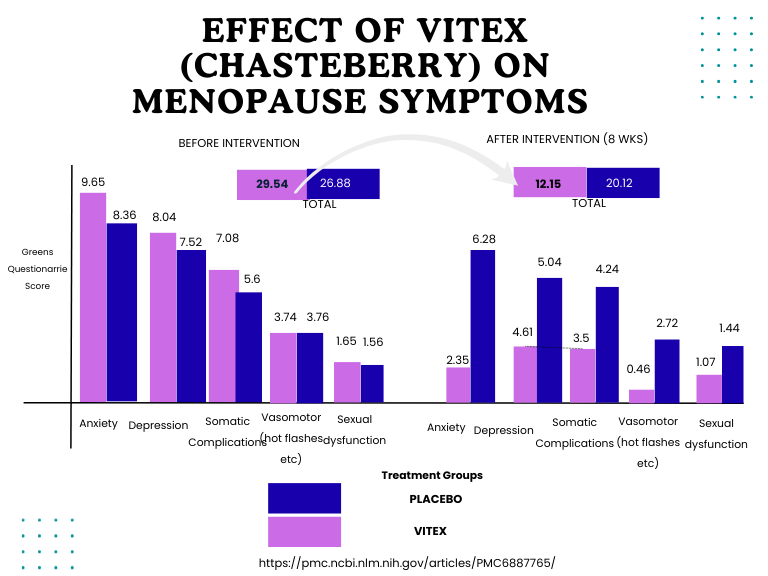
https://pmc.ncbi.nlm.nih.gov/articles/PMC6887765/ (menopause)
Background
Menopausal symptoms have remarkable negative effects on women’s quality of life, justifying the need to assess various therapeutic options. This research aimed to determine the effectiveness of Vitex agnus-castus extracts in alleviating menopausal symptoms in comparison with that of placebo.
Methods
This study was a randomized controlled double-blind clinical trial with a study group of 52 women referred to a clinic in Kermanshah in 2017. The participants were randomly divided into two groups: Vitex group (26 subjects) and placebo group (26 subjects). Menopausal symptoms were assessed using the Greene Scale before and 8 weeks after the intervention.
Results
After the intervention, the mean scores for total menopausal disorder, anxiety, and vasomotor dysfunction were significantly lower in the Vitex group than in the placebo group (P<0.05). The mean scores of the variables of somatic complications, depression, and sexual dysfunction did not show significant differences between the Vitex and placebo groups (P>0.05).
Conclusion
Administration of Vitex agnus-castus extracts as a phytoestrogenic medicine can alleviate menopausal symptoms in women.
ALPHA LIPOIC ACID ON ANTIAGING SKINCARE
The result is that α-lipoic acid, as an antioxidant, aids in skin composition, protects the skin such as by forming a barrier to the development of the stratum corneum, and regulates water, nutrients, and external bacteria. It is believed that it can be given to help prevent the penetration of factors such as viruses. Changes in the proteins of Filaggrin, involucrin, loricrin, keratin10, and collagen IV by α-lipoic acid treatment were confirmed. Treatment of α-lipoic acid for as long as 7 days showed an increase in filaggrin, involucrin, and collagen IV proteins, and it was confirmed that the expression of keratin10 protein increased at some concentrations. Based on these results, a simple and convenient drivable pumpless skin-on-a-chip technology can be used to evaluate the efficacy of the drug and identify physiological changes as a skin substitute. We anticipate that this system can be used as an alternative to disease models and animal testing methods that are useful in the process of cosmetic development.
https://pmc.ncbi.nlm.nih.gov/articles/PMC7927099/
Wild Yam on Hormone Balance
- 2024 Cohort Study: A recent investigation of 34 women using a commercial wild yam hormonal salve for 21 days reported significant improvements in several areas:
- Night Sweats: An 82.3% relief rate after three weeks.
- Vaginal Dryness: 73.5% of participants reported alleviation by the end of the study.
- Sleep and Mood: 76.5% of users recorded sustained improvement in both categories.
- General Well-being: 91% of participants reported overall positive results including improvements in libido and skin health.
- Symptom Management vs. Hormone Levels: This same 2024 study suggests that while biochemical hormone levels (like blood estradiol) may not always spike, the symptomatic relief can be measurable and significant for the user.
https://www.researchgate.net/publication/377369956_EVALUATING_THE_EFFICACY_OF_WILD_YAM_HORMONAL_SALVE_IN_MANAGING_MENOPAUSAL_SYMPTOMS_A_COHORT_STUDY
Dong Quai on Hormone Balance
https://www.medicalnewstoday.com/articles/dong-quai#summary
Further Studies on Breast Enhancement
REFERENCES
1) Amsterdam, J.D., Garcia Espagna, F., Goodman, D. Hooper, M., and Hornig-Rohan, M. : Breast enlargement duringchronic antidepressant therapy. J.Affect Disord, 46(2): 151-6, 1997
2) Anderson, T.J., Battersby, S, King, R.J., McPherson, K., and Going, J.J.: Oral contraceptive use influences resting breast proliferartion. Hum Pathol, 20(12): 1139-44, 1989
3) Bolega, C., Poli, A., Cignarella, A., and Paoletti, R. : Phytoestrgens: pharmacological and therapeutic perspectives. Curr Drug Targets, 4(1): 77-87, 2003
4) Cassidy, A. : Potential risks and benefits of phytoestrogen-rich diets. Int J Vitam Nutr Res, 73(2):120-6: 2003
5) Coldham, N.G., and Sauer, M.J.: Identification, quantitation and biological activity of phytoestrogens in a dietry supplement for breast enhancement. Food Chem Toxical, 39(12),: 1211-24, 2001
6) Cos, P., De Bruyne, T., Apers, S., Vanden Berghe, D., Pieters, L. and Vlietinck, A.J.: Phytoestrogens: recent developments. Planta Med, 69(7): 589-99, 2003
7) Ewies, A.a.: Phytoestrogens in the management of the menopause: up-to-date. Obstet Gynecol Surv, 57(5), 306-13,2002
8) Ganry, O.: Phytoestrogen and breast cancer prevention. Eyr J. Cancer Prev, 11(6) 519-22, 2002
9) Garrte, S.D, Lee, H.A., Friar, P.M. and Morgan, M.R.: Validation of a novel estrogen receptotr-based microtiration plate assay for the determination of phytoestrogen in soy
basd foods, J.Agric Food Chem, 47(10): 4106-11, 1999
10) Hartman, B.W., Laml, T., Kirchengast, S.,Albrecht, A.E. and Huber J.C.: Hormonal Breast Augmentation: prognostic relevanceof insulin –like growth factor-I. Gynecol Endocrinol, 12(2): 123-7, 1998
11) Jernstrom H. and Ollson H.: Breast siae inrelation to endogenous hormone levels, body constitution, and oral contraceptive use inhealthy null gravid women aged 19-25 years.Am J Epidemiol 145(7): 571-80, 1997
12) Lamartiniere C.A., Zhang, J.X. and Contreneo, M.S.: Genistein study in rats: potential for breast cancer prevention and reproductive and developmental toxicity. Am J Clin Nutr, 68( 6 suppl.): 1400S-1405S,1998
13) Messina, M.J., Persky, V., Stechell, K.D. and Barnes S.: Soy intake and cancer risk: a review of the in vitro and in vivo data. Nutr Cancer, 21(2): 113-31, 1994
14) Tsourounis, S.: Clincal effect of phytoestrogens. Clin Obstet Gynecol, 44(4): 836-42, 2001
15) Wan, W., Tanaka, Y., Han , Z., and Higuchi, C.M.: Proliferative respons of mammary glandular tissue to formononetin. Nutr Cancer, 23(2): 131-40, 1995
16) Ganry, O.: Phytoestrogen and breast cancer prevention. Eyr J. Cancer Prev, 11(6) 519-22, 2002
17) Garrte, S.D, Lee, H.A., Friar, P.M. and Morgan, M.R.: Validation of a novel estrogen receptotr-based microtiration plate assay for the determination of phytoestrogen in soy basd foods, J.Agric Food Chem, 47(10): 4106-11, 1999
18) Wuttke, W., Jarry, H., Westphalen, S., Christoffel, V; and Seidlova-Wuttke, D., : Phytoestrogensfor hormone replacement therapy? J. Steroid Biochem Mol Biol, 83(1-5): 133-47, 2002